Saturday, April 05, 2008

"Bella Notte"


Andaba yo por mis 11 u 12 años, y estaba desesperado porque el cine Palais Concert de Oruro tenía en cartelera la película de Walt Disney, “La Dama y el Vagabundo”, al parecer, por última vez. Era un hecho por ese entonces que si una película se iba, iba a ser muy difícil volverla a ver, a no ser que fuera una de esas épicas bíblicas que casi cada Semana Santa se reponían en las carteleras de los cines de entonces, casi por obligación.

Por mucho que me empeñe en recordar, no se cómo, pero de alguna forma tenía el dinero suficiente para pagar la entrada a la función, sólo que habían dos pequeños detalles, ya eran las 8 de la noche y la película en cuestión iba después de otra que trataba de cómo la selección brasileña había conquistado la Copa Mundial de México en 1970.

Como todo niño que empuja los límites ya anticipaba yo que si entraba al cine, iban a haber consecuencias nada agradables para mí, pero entre eso y el hecho más cercano de estar a las puertas del cine con la promesa -casi- inmediata de disfrutar de una película, que por alguna extraña razón no había podido ver antes, pudo más lo último. Ah! Por ese entonces nosotros -mis hermanos y yo- teníamos casi asegurada la asistencia a la función matinal de cada domingo, y si eso no sucedía, era porque toda la familia iba a ver algún estreno. De tal modo que no entendíamos del todo como otros niños, no fueran tan a menudo al mismo como nosotros, y a veces hablaban del asunto del mismo modo en que tal vez nosotros hubiéramos descrito un viaje a China o algo tan inusual como eso.

El cine Palais Concert era -¿es?- una sala preciosa, algo parecida al Teatro Municipal de La Paz, solo que de un tamaño un poco más chico, y cuenta con unos preciosos murales en sus paredes. Una cosa curiosa, era que la platea con butacas, eran los asientos más caros, y la parte de arriba que los cines de Oruro de ese entonces denominaban Galería, eran los asientos más baratos, porque sólo eran unas gradas de madera, sin respaldos para la espalda. Todo esto al contrario de los cines de La Paz en los que la platea eran los asientos más baratos y la parte de arriba que se denominaba Mezzanine, eran los asientos más caros.

Una vez adentro las luces se apagaron, y comenzó a dar la primera película, y yo por ese entonces no sabía de lo que me perdía, así que no andaba para nada interesado en las evoluciones maravillosas de Pelé, Tostão, Carlos Alberto, Jairzinho, Gerson y otros. Me parecía que cada partido que reseñaban sobre las andanzas de esa famosa escuadra verde-amarelha, duraban incluso más que los 45 minutos que duraron realmente cada uno de esos encuentros. Finalmente Brasil se impuso en el partido final por 4-1 sobre la selección italiana. Y por fin, luego de un pequeño intervalo, comenzó la película que tanto quería ver, y de la que había oído por radio, la versión narrada incontables veces.

¿Es necesario añadir que por ese intervalo de tiempo me sentí como si estuviera en otra dimensión? Bueno, si siempre me han gustado las películas, por ese entonces las de animación eran lo máximo para mí. Es un gusto adquirido y que hasta ahora no me ha abandonado, para pesar de gente que me conoce bastante bien y que opina que ya debería haber quemado esa etapa.

Lo malo vino después de que acabó la función, las luces se encendieron y las más o menos 3 docenas de personas que estaban en el cine, se dispersaron por todos lados ni bien salieron a la plaza 10 de Febrero. De ese modo yo me quedé parado ahí por unos segundos y recién entonces me di cuenta de lo que había hecho. Por ese entonces en Oruro, cerca a la medianoche no había transporte público de ninguna clase, y aún si hubieran circulado taxis, ya no tenía dinero para costearlos, así que lo único que había que hacer era empezar a recorrer el largo camino a casa. La distancia cubría desde la plaza 10 de Febrero hasta los barrios mineros de la Zona Norte de Oruro, que es donde vivía en ese entonces (para los que conocen La Paz, la distancia sería más o menos como ir desde la Plaza Isabel La Católica hasta la Cervecería en la Av. Montes).

No se en realidad cuánto tardé, en hacer el recorrido, solo sé que andaba muerto de miedo, porque a cada paso que daba, me daba cuenta de que en las calles no había nadie, y las luces de las casas estaban todas apagadas, así que el único ruido que oía era el que hacía al caminar. Y ya llegando a mi vecindario empecé a recordar otro pequeño detalle que se iba a interponer entre mi casa y yo. Muchos vecinos, dejaban sueltos a sus perros por la noche, de modo que fueran un disuasivo para los ocasionales ladrones que pudieran acechar sus casas.

A tres cuadras de llegar a mi casa me sale al paso un perro, que no me daba cuartel, el condenado por suerte, nunca quiso perseguirme hasta donde yo estaba, solo se aseguraba de no dejarme pasar por la calle cada vez que me acercaba, y me tuvo ahí por un buen tiempo. Ya pasada la medianoche, yo a tres cuadras de mi casa, y el perro que no me dejaba pasar. Ni pensar en ir por otro lado, ya que de seguro habían perros mucho más malos que éste.

Me imagino que en mi casa, -conociendo como la conozco a mi madre-, que ha debido insistir tanto a mi padre, que él tuvo que salir. (Supongo que iba a ir a los hospitales, o a la morgue, o a preguntar a conocidos suyos si no tenían noticias mías.) Para su fortuna bajando por la calle alcanzó a verme, hizo corretear al perro con lo cual pude reunirme con el, y así llegué por fin a casa. Ahora bien, se que recibí una de las chicoteadas de aquellas que deberías recordar toda la vida, pero cosa extraña tampoco consigo recordar los detalles de la misma ni cuánto me dolió, o si me cortaron algunos otros privilegios al día siguiente. Ya el susto mayor que fue el de caminar solo por medio Oruro, y el hecho de no poder llegar a mi casa habían pasado, y además me quedaba la satisfacción de haberme salido con la mía. Solo que ahora lo pienso y digo que si hubiera sabido entonces que iba a haber un tiempo en el que podía tener la película que quisiese, en un pequeño disco de plástico, para poderla ver las veces que quisiera, bien me hubiera ahorrado esa experiencia.

I was around 11 or 12 years old, and I was desperate because the movie theater Palais Concert at Oruro was exhibiting the Walt Disney movie, "The Lady and the Tramp", apparently for the last time. It was a fact at the time that if a film was going out, it would be very difficult to see it again, unless it was one of those biblical epics that returned every Easter on the most of theaters then, almost as an obligation.

As much as I strive to remember, I do not kno
w how, but somehow I had enough money to pay the entrance to the function, which left only two small details in front of me, it was already 8 pm and the film in question went after another dealing with how the Brazilian team had won the World Cup in Mexico 1970.

Like any child who pushes the limits
, I already anticipated that if I entered to the theater, there would be consequences anything but nice for me, but between that and the fact of being closest to the door with the promise of enjoying a film, which for some strange reason had not been seen before, the last won. Ah! By then we -my brothers and I- had almost assured assistance to the movies of every Sunday morning, or if that's not happened, it was because the whole family went to see a premiere. So that is not entirely understood for me when other children, were not habituals as us, and sometimes they spoke of the matter in the same way that perhaps we should have described a trip to China or something so unusual as that.

The theater Palais Concert had –has?- a beautiful room, something similar to the Municipal Theater in La Paz, only in a slightly smaller size, and has some beautiful murals on the walls. One curious thing was that the lower part audience seats (platea), were more expensive, and that the top seats of Oruro theaters then called Gallery, these seats were cheaper, because there were only a few stands of timber, without backs. All this in contrast to the cinemas of La Paz where the lower audience seats (platea), were cheaper and that the top (upper) seats were called Mezzanine, were the most expensive.


Once inside the lights were turned off, and began with the first movie, and by that time I did not know what I lost, so I’ve lost any interest in the wonderful developments of Pelé, Tostão, Carlos Alberto, Jairzinho, Gerson and others. It seemed that each party outlined on the wanderings of that famous green-amarelha squad, even lasted longer than 45 minutes that lasted really each of those meetings. Finally Brazil won in the final match by 4-1 over Italy. And finally, after a short interval, the film that I wanted to see began, whose narrated version I’ve heard on the radio countless times.

Is it necessary to add that by that time I felt like going to another dimension? Well, if I always liked the movies, then the animated ones were for me the most. It is an acquired taste, and so far I haven’t left, although people who know me quite well, believed that I should have burned that stage.

The trouble came after the end of the function, the lights were lit and plus or minus 3 dozens of people who were in the movie, dispersed
everywhere as soon as they came to the 10 de Febrero square. Thus I stayed standing there for a few seconds and then I just realized what I had done, then in Oruro, close to midnight there was no public transport whatsoever, and even if they had been taxis, no longer have the money to pay, so the only thing I had to do was begin to walk the long way home. The distance covered from the 10 de Febrero square to the miner neighborhoods of the Northern Zone of Oruro, which is where I lived at that time (for those who know La Paz, the distance would be more or less like going from Isabel la Católica square until the Brewery (CBN) at Montes Av.

I don’t really know how much took me in making the trip, only thing I know is that I was scared to death, because with each step I realized that on the streets there was nobody, and the lights of the houses were all off, and the only noise I heard was the one I was making while walking. And now near at my neighborhood I began to recall another small detail that would arise between my home and myself. Many neighbors, let loose their dogs at night, so they were a deterrent to casual thieves who might stalk their homes.


Three blocks lasting to reach my house, I met a dog, that gave me no space, condemning me to the fate, he never tried to go after me while I was at far, he just made sure not to let me pass on the street every time I approached, and I was there for quite a while. Already after midnight. I was staying three blocks away from my house, and th
e dog refusing to yield pass. You can’t think about going by other side, since I could have met meanier dogs than this.

I imagine that in my house, knowing as I know to my mother, she surely was pushing to my father, and he had to leave. (I suppose that he was
to go to hospitals or the morgue, or ask if I have been seen by his known friends and relatives.) To my fortune he reached down the street and see me, he put the dog on the run, with which I was able to meet him, and so finally arrive at home. However, once there I received one of the spankings, those that you should remind all your life, but it is also a strange ting, that I can’t remember the details of it or how much it hurted, or if I were cut of some other privileges the following days. The big shock of walking alone through half of the Oruro city, and the fact of not being able to reach my house had passed, and I was also pleased to have done what I liked so much. Only now that I think about it and say that if I had known then that there was going to be a time when any film that I could have wished, would come in a small plastic disk, to be able to watch it countless times, well then I would have spared me the whole experience.


Monday, March 31, 2008

Una canción, dos versiones Vol. 1 (One Song, Two Versions Vol. 1)


Aprovechando que el día de hoy no trabajo, salí a pasear por el centro de La Paz. Cuando hago eso, casi siempre que me toca caminar, lo hago ya sea oyendo alguna música que me gusta, o poniendo la radio. Hoy escogí lo último y me arrepentí de haberlo hecho, porque según las noticias que oigo, casi todo va mal acá, hay marchas en todos lugares, (oficialistas y opositores por igual), hay huelgas, bloqueos, y los precios siguen subiendo, y el sindicato de choferes amenaza con el respectivo paro nacional y ya sabemos que después de eso suben si o si las tarifas... En fin una sensación cada vez más creciente de que estamos a punto de repetir los aciagos días de la UDP, con su carga de inflación descontrolada. Yo asumí recién la enormidad de lo que vivimos en esa época, cuando un día me puse a pensar que acababa de comprar un Sublime (chocolate) en unos 50.000, dinero que en los buenos tiempos en los 70's te hubiera alcanzado para comprarte una casa y muebles...

Así que sin necesidad de que el gobierno amenace con clausurar radios por alarmistas (¡aunque tengan la razón!), me decidí
a apagar la misma, y poner música en su lugar, y fue entonces cuando redescubrí por millonésima vez la canción de Burt Bacharach, I'll Never Fall In Love Again, cantada por la gran Dione Warwick, pero más sorprendente aún fue descubrir, que sin querer tenía en mi "truchi-pod" también una versión en español de la misma canción cantada nada más y nada menos que por otro gran cantante, Matt Monro, solo que esta versión era en español, y decidí convidarles a oír ambas versiones... a ver qué les parece...


Taking advantage that today I don't work, I went for a walk through the downtown of La Paz. When I do that, I almost always that I walk, I either hear any music that I like, or tune in the radio. Today I chose the latter and I've regretted having done so, because according to the news I've heard, almost everything goes wrong here, there were marches in all places (official and opponents alike), there are strikes, blockades, and prices continue to rise, and the drivers' union is threatening to make their national strike and we already know that after that their rates climbs yes or yes... I've ended feeling increasingly, that we are about to repeat the dark days of the UDP, with its burden of uncontrolled inflation. I assumed the big size of what we lived in that time, when one day I began to thought that I've just buy a Sublime (chocolate) at about 50,000, money that the in good times at the 70's you had needed to buy a house and furniture ...

So without needing that the government threats to shut down radio stations by alarmist (even if they're right!), I decided to turn it off, and put music in its place, and it was only then, when I rediscover for the millionth time the Burt Bacharach's song , I'll Never Fall In Love Again, sung by the great Dione Warwick, but I was even more surprised to discover that I had in my "fake-pod" inadvertently, also a Spanish version of the same song sung by nothing more and nothing less by another great singer, Matt Monro, only that this version was in Spanish, and I decided to invite you to hear both versions ... And see what you think about them...


Dione Warwick, I'll Never Fall In Love


Matt Monro, Jamás volveré a enamorarme


Tuesday, March 25, 2008

Juno


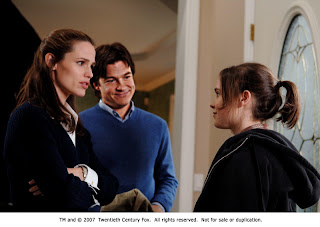
Juno McGuffin (Ellen Page) una joven de 16 años se encuentra con la novedad de que está esperando un bebé. Y lo primero que hace es ir a avisar al novio-amigo Paulie Bleeker (Michael Cera) la inesperada novedad, el que al conocer del asunto se limita a decirle ¿Qué vas a hacer?. Así comienza esta película sobre una joven muy ingeniosa de espíritu libre quien se ve primero ante la disyuntiva de abortar o dejar nacer a su hijo, y luego de tomar partido por lo último, finalmente decide que debe dar a su hijo en adopción.

Antes de eso, comunicará la novedad a sus padres, y soportará el ostracismo de las compañeras de su colegio, así como el alejamiento de su novio. Juno encuentra finalmente a sus candidatos, una pareja acomodada y feliz, Vanesa y Mark Loring (Jennifer Garner y Jason Bateman), a la que aparentemente sólo les falta el hijo para completar el cuadro de felicidad perfecta. En la larga espera, se verá sin embargo cómo el embarazo de Juno acaba afectando a todos de distintas maneras, y en especial a los Loring.

Al involucrarse Juno en demasía con Mark, a través de gustos e intereses compartidos, en especial a través de la música, ella acaba descubriendo para su pesar las grietas de la relación de la pareja adoptante se hacen visibles y de ese modo peligra el mundo de felicidad que había planeado para su hijo.

¿Qué puedo decir de esta película, si tengo sentimientos encontrados acerca de la misma? Bueno prosigamos con los puntos buenos, por sobre todo la genial actuación de Ellen Page, quien con dos películas (HardCandy, la anterior) ya me ha ganado como un fan incondicional. Una guión que no decaye a lo largo del filme, y unos secundarios de lujo (Garner y Bateman), por fin se ve el lado más amable del actor J. K. Simmons quien hace el papel del padre de Juno y de Allison Janney en el rol de la madrastra de la muchacha, en una representación atípica de las madrastras.

Ahora vayamos por las cosas, que no es que me hayan disgustado, sino más bien me han desubicado un poco. La decisión de Juno de tener al niño no viene de una reflexión consciente, más parece estar asustada de las condiciones aparentemente poco higiénicas de la clínica a la que acude por un aborto. ¿Serán así esas clínicas, o es sólo un intento de advertir a las niñas y adolescentes que se vean en similar situación?

Lastimosamente vemos que los hombres en el filme, no se llevan la mejor parte ya que todos, incluido el empleado del almacén parecen tontos. Revisando: el novio con su preguntita ¿qué vas a hacer?, es un firme candidato a ser removido de la piscina genética, y aparentemente o es un cínico total o realmente el muchacho llegó tarde a la repartición de cerebros. El padre de Juno, ¿cuál ha sido su rol como padre, en tratar de evitar situaciones como la que su hija le presenta?, pero aún si hubiera advertido sobre el asunto, el hecho de que acepte tan tranquilo y campante la decisión de Juno, me obliga a pensar que tal vez esto es una cuestión cultural y que la gente allá no está tan apegada al concepto de familia, como en otros lados. Y si bien esas cosas también pasan en Bolivia, al menos acá hay la excusa de la ignorancia y/o pobreza, ¿cuál es su excusa?. Y para acabar el futuro padre adoptivo, es un cretino total, porque debería haberlo pensado bien antes de haber siquiera pretendido ser un padre adoptivo, sabiendo en el fondo que no deseaba dicha responsabilidad.

Tendrán que ver la película para saber el desenlace de todo el asunto. Pero como lo dije antes la misma me ha dejado con sentimientos encontrados. Sin embargo he disfrutado de la experiencia y en particular del trabajo de Ellen Page, quien sin duda dará que hablar en los futuros filmes en los que le toque actuar.


Juno McGuffin (Ellen Page) a 16-year-old girl, face the fact that she is expecting a baby. And the first thing she does is go to communicate the boyfriend Paulie Bleeker (Michael Cera) the unexpected novelty, who hearing the news merely tells her, what are you going to do?. So begins this movie about a very clever girl of free spirit who is facing the choice of abortion or let live their child, and after she decided for the last, she finally decides that must give her child up for adoption.

Before that, the girl will notify to their parents, and will bear the ostracism of the companions of her school, as well as the departure of her boyfriend. Juno finally found their candidates, a couple wealthy and happy, Vanesa and Mark Loring (Jennifer Garner and Jason Bateman), which apparently lack only the child to complete the picture of perfect happiness. In the long wait, we will see how the pregnancy of Juno ends up affecting everyone in different ways, and especially the Loring couple.

As Juno gets too involved with Mark, through similar tastes and interests, especially through music, she has just discovered with regret, the cracks of the relationship between the adoptive couple are visible and thus endangered the world of happiness that she had planned for her son.

What can I say about this movie, if I have mixed feelings about it? Well, we continue with the good points, especially the brilliant performance by Ellen Page, who with two films (Hard Candy, before this), as won me as a fan. A script that doesn't decays throughout the film, and some luxury supporting actors (Garner and Bateman), finally we see the friendlier side of the actor J. K. Simmons, who plays the father of Juno and Allison Janney in the role of the stepmother of the girl, in an atypical representation of the stepmothers.

Now we go for the things that I have not upset, but I have a little concern. Juno's decision of let the child born does not come from a reflexive thought, she seems to be more afraid of the non hygienic conditions of the clinic to which she goes for an abortion. Are these clinics really like this, or is it just an attempt to warn girls and adolescents who are in similar situation?

Unfortunately, we see that men in the film, did not shine here because everyone, including the employee at the store seem to be silly. Checking: the boyfriend with his question, “what will you do?”, is a strong candidate to be removed from the gene pool, and apparently is a cynical or actually the boy arrived late for the distribution of brains. The father of Juno, what was his role as father, in trying to avoid situations like the one presented by his daughter?, But even if he had warned about the matter, the fact that he’s so calm and accept the decision of Juno as anything this big happened, compels me to think that perhaps this is a cultural issue, and that people there is not as attached to the concept of family, as elsewhere. And while these things also happen in Bolivia, at least here, there is the excuse of ignorance and / or poverty, what is their excuse?. And to finish, the future adoptive parent, is a total jerk, because he should have thought twice before they have even tried to be an adoptive parent, knowing at the bottom that he did not want that responsibility.

You will have to watch the film to know the outcome of the whole affair. But as I said before it has left me with mixed feelings. But I’ve enjoyed the experience and in particular the work of Ellen Page, who undoubtedly will make us talk in future films in which she took part.


Horton y el mundo de los Quién (Dr Seuss' Horton Hears a Who!)


Una mota de polvo pasa volando delante del elefante Horton (Jim Carrey), quien vive en el bosque de Nool. Gracias a sus inmensas orejas él si logra oír a alguien y le parece que piden auxilio. Dentro de la mota de polvo, el alcalde de Villa Quién (Steve Carell), cree haber notado que puede haber personas tan grandes viviendo muy por encima de ellos, idea que es rápidamente desechada por sus conciudadanos, quienes lo tildan de loco y bobo.

Esta es la idea central que forma parte de una de las historias para niños más celebradas de Dr. Seuss, y que finalmente ha sido llevada a la pantalla bajo la dirección de Jimmy Hayward y Steve Martino. La cinta básicamente nos narra la forma en que dos personajes muy diferentes (siendo el tamaño el más obvio), logran trabar amistad, y de cómo la conducta aparentemente errática de Horton es vista por una demasiado conservadora canguro, como una alteración del orden establecido y de una amenaza a la sociedad, porque, ¿quién podría creer que hay todo un mundo dentro de una mota de polvo?

Horton en un primer instante trata de desligarse lo antes posible de la responsabilidad de cuidar una flor, en la que la mota se ha posado, pero se horroriza al comprobar los múltiples peligros que tendría que enfrentar ya sea de otros animales, o de cambios climáticos, al final distingue un lugar en el que parece que los pequeños habitantes de Villa Quién podrían desarrollarse al amparo de muchos peligros. Pero no sin antes tener que sortear un sinnúmero de obstáculos, naturales y especialmente de los enviados de la odiosa canguro, quien opina que es imprescindible humillar y quebrar la voluntad y creencia de nuestro héroe elefante.

Por el otro lado el alcalde de Villa Quién también tiene sus propios problemas, ya que es el único que sabe del grave peligro que corren, y que su estilo de vida e incluso su propia existencia, corren gravísimo peligro. Sorprende ver como sus conciudadanos sin embargo, no se inmutan por lo que deberían ser gravísimas señales de advertencia, y toman cada día como viene y aprovechando los mismos, para realizar otras actividades, y están más concentrados en celebrar el aniversario de Villa Quién, que en su patético alcalde. El alcalde también tiene un problema familiar con su único hijo (él tiene muchas hijas), a quien no puede convencer de aceptar el legado familiar de un día tener que tomar la responsabilidad de ser el próximo alcalde.

Esta es una cinta de animación un tanto atípica, ya que nos muestra una historia comprensible para público de todas las edades, sin tener que recurrir a las últimamente acostumbradas parodias de otras películas y/o sátiras de íconos de la cultura pop. A mi me sorprendió especialmente la determinación de Horton de poner a salvo una pequeña mota de polvo, aún en momentos en que la empresa parecía del todo imposible, (yo me hubiera rendida a la centésima flor, cuando la vean entenderán de qué hablo). También vemos como tus amigos y vecinos pueden ponerse en tu contra cuando alguien con la creencia equivocada de que representas un peligro para ellos, pueden volverse en contra tuya, y aprecié mucho a Morton un pequeño ratón que fue el único que estuvo del lado de Horton, aún cuando lo más fácil hubiera sido unirse a la muchedumbre.

Esto también me hace pensar en la arrogancia de mucha gente, que cree tener la verdad absoluta y que cualquiera que los contradiga merezca ser perseguido y castigado, más importante aún el hecho de que otro también pueda tener la razón. Nosotros ya hace mucho descubrimos, que si hay vida pequeñita en una gota de agua, tal vez no está lejano el día en que todos aceptemos finalmente que nuestro “Horton” existe.


A flying dust speck pass in front of the elephant Horton (Jim Carrey), who lives in the woods of Nool. Thanks to its immense ears he succeeds to hear someone calling and seemed to cry for help. Within the dust speck, the Major of Who-Ville (Steve Carell), Believe that maybe there can be so large people living far above them, an idea that was quickly dismissed by their fellow citizens, who named him of crazy and silly.

This is the central idea that is part of one of the most celebrated children's stories of Dr. Seuss, and that has finally been brought to the screen under the direction of Jimmy Hayward and Steve Martino. The film basically tells how two very different characters (the size being the most obvious), achieve to lock friendship, and how the apparently erratic behaviour of Horton is seen by a kangaroo too conservative, as an alteration of the order and a threat to society, because who would believe that there is an entire world inside a speck dust?

Horton in a first moment tries to release as soon as possible the burden of care giving a flower, in which the speck has been perched, but was horrified to see many threats it would face either from other animals, or from climate change and at the end he finds a place where it seems that the smaller inhabitants of Who-Ville could be developed without imminent dangers. But not without first having to overcome countless obstacles, natural and especially envoys of the odious kangaroo, who believes it is imperative to humiliate and break the will and belief of our elephant hero.

On the other hand the Major of Who-Ville also has his own problems, since he is the only one who knows the grave danger in which he and his people are, and that their lifestyle and even their very existence, are at serious risk. Surprisingly we see as their fellow citizens, however, are not aware of the many warning signs, and take each day as it comes and taking advantage of them to perform other activities, and are more concentrated in celebrating the anniversary of Who-Ville, than hearing to their pathetic Major. The Major also has a family issue with her only son, (he has many daughters), to who can not convince to accept the family legacy of one day having to take the responsibility of being the next Major.

This is an animated film somewhat atypical because it shows us a story understandable to the public of all ages, without resorting to the lately accustomed parodies of other films and / or satires of pop culture icons. What surprise me the most was especially the determination of Horton to put in a safe place a small speck dust, even at a time when the task seemed quite impossible, (I had surrendered to the one-hundredth flower, when you see the film you’ll understand what I am talking about). We also see the way your friends and neighbours can turn against you when someone with the mistaken belief that you represent a danger to them, they can work against you, and much appreciated for me is a small mouse, Morton, because he was the only one that was on the side of Horton, even though it would have been easier to join the crowd.

This also makes me think of the arrogance of many people, who believe that has the absolute truth and that anyone who contradicts them, are deserves to be prosecuted and punished, most importantly the fact that perhaps other may have the reason. We discovered long ago that there is life in a tiny drop of water, perhaps we are not so far from the day when all finally agree that our "Horton" exists.


Saturday, March 22, 2008

Soy del pueblo y no estoy con el cambio (I'm part of the people and I'm not with the change)


Últimamente he venido notando que en los programas de opinión libre conducidos en varias radios, así como en entrevistas a dirigentes políticos, cívicos, vecinales, etc., etc., se usan demasiado a menudo las palabras PUEBLO y MOVIMIENTOS SOCIALES, dando a entender que aquellos que caen dentro de estas categorías, son los reales y únicos jueces y portavoces de aquello que está bien y por el lado contrario satanizando a cualquiera que critique la actual gestión gubernamental, (con fundamentos o no), de ser neoliberales, medialuneros, reaccionarios, de gente no comprometida con el cambio, de ser racistas, etc., etc.

Pues bien, yo no sé quien les ha dado la autoridad, de cualquier clase, para etiquetar a la gente de ese modo, de acuerdo a si piensan como ellos o no, para empezar una definición aceptada (de varias que hay) para el término PUEBLO, es: “conjunto de personas de un lugar, región o país.” Como ven eso no les da derecho a proclamarse como pueblo y descalificar a los demás que no piensen como ellos como si no fuéramos también PUEBLO, y el hecho de tener la piel un poco más clara, no nos descalifica; el hecho de tener un poco más de dinero, no nos descalifica; el hecho de tener que vivir en la ciudad, no nos descalifica; el hecho de criticar las metidas del presidente y sus ministros, no nos descalifica.

También a los famosos de turno, les gusta sacar a relucir el denominativo de MOVIMIENTOS SOCIALES, diciendo por ejemplo: “Los movimientos sociales, no vamos a permitir esto o lo otro”, “los movimientos sociales nos vamos a movilizar”, “los movimientos sociales van a expropiar aquello”, y digo yo, para empezar, ¿quien los ha ungido con cualquier clase de responsabilidad, como para que tomen derechos que no les corresponden?, ¿se darán cuenta siquiera, que en su limitada inteligencia, dicen defender la democracia con su boca, mientras que con sus actos de matonaje, la están violando y pisoteando a cada rato?

Un movimiento social es toda aquella institución que forma parte activa de una sociedad, un club social o deportivo, una asociación de profesionales, una junta de vecinos, todos ellos pueden ser nombrados también como movimientos sociales, pero al parecer la gente que se ha agrupado con la misión de supuestamente defender la democracia (más bien deberían decir al actual gobierno), usa las dos palabras y se yerguen en autoproclamados defensores de todo lo bueno que supuestamente este gobierno representa, sin darse cuenta a veces que poco a poco están cayendo en los mismos yerros de anteriores gobiernos, los cuales por supuesto han criticado. ¿Quién votó por ellos? ¿Quién los nombró en guardianes de los mentados cambios que planea el gobierno? Más importante aún ¿quién los mantiene, y les paga el transporte, estadía y alojamiento, cada vez que se agolpan en algún lugar con algún plan violento como objetivo primordial? Entonces mal pueden decir que representan a toda una comunidad, o a una ciudad o mucho menos a un país. Lo irónico es que si el gobierno actúa alentando por debajo a estos grupos, rompiendo y torciendo la ley cuando les acomoda no puede menos que esperar que los cívicos y opositores del gobierno, copien tan bonitos gestos, y así en medio de todo el barullo, las voces de los sensatos son ahogadas, y en muchos casos conminadas tomar partido por uno u otro lado so pena de represalias.

Y así yo digo hoy que ninguna de las opciones que actualmente nos presentan es buena a larga para Bolivia. Que había que buscar cambios es innegable, pero que había que trabajarlos lenta y seguramente también era necesario, ya que como esto acabó, la prisa de unos resultó en la urgencia de los otros, y al final nadie piensa en Bolivia. Unos con su idea de tener su paisito dentro de otro (o como los más descarados lo proclaman, independizarse), los otros retrocediendo el reloj quinientos años atrás y tratando a todo el que no esté “identificado con el cambio”, como si fuéramos los Pizarro, los Almagro, los Cortéz, de tiempo atrás. Frente a todo eso yo me rebelo y digo aquí mi verdad, tengo tantos derechos como cualquier otro que ha nacido en NUESTRO país, y voy a pelearlos porque los respeten los de un bando o el otro. Hey dicho.


Lately I have been noticing that many of the programmes of free opinion conducted at several radio stations as well as interviews with political leaders, civic leaders, neighbourhood leaders, etc., etc.,. are using too often the words PEOPLE and SOCIAL MOVEMENTS, implying that those who fall within these categories are the real and only judges and spokesmen for what is good and in the contrary demonizing to anyone who criticizes the current government, (with fundamentals or not), calling them as neoliberals, “medialuneros”(1), reactionaries, people who are not committed with the change, even of racists, and so on.

Well, I do not know who has given them the authority of any kind to label the people in this way, according to whether or not they think like them, to start an agreed definition (of which there are several) for the term PEOPLE, is "set of persons from one place, region or country." As you can see that does not give them the right to proclaim himself as a people and disqualify others who do not think like them of not being people, and having the skin a little more clearly, does not disqualify us; having a little more money, does not disqualify us, the fact of having to live in the city, does not disqualify us, the fact that we criticize the president and his ministers does not disqualify us.

Also the famous of turn, like to wave the words of SOCIAL MOVEMENTS, saying for example: "The social movements, we will not allow this or that", "social movements are going to mobilize," "Social movements will expropriate that", and I say, to begin with, who has anointed them with any kind of responsibility, for them to take rights not granted?, how they will find even in their limited intelligence, told us that they defend democracy with their mouth, while with their acts of bullying, are violating and trampling it each time?

A social movement is all institution which is an active part of society, a social club or sports club, an association of professionals, a board of neighbours, all of them can be appointed as social movements, but apparently the people who have been grouped with a mission to supposedly defend democracy (rather should they say to defend the present government), and uses the two words and stands up as self-proclaimed defenders of all the good that this government supposedly represents, sometimes without realising that they are slowly falling in the same mistakes of past governments, which of course they has criticized. Who voted for them? Who appointed them as guardians of the named changes that the government plans? More importantly, who keeps, and paid transportation, accommodation and housing, each time they are crammed somewhere with a violent plan as its primary objective? So they cannot say that are representing an entire community or a city or a country much less. The irony is that if the government acts to encourage these groups below the table, twisting and breaking the law when it suits to them, we can only expect that the civic leaders and opponents of the government, copied so nice gestures, and in the midst of all the chaos the voices of the wise are drowning, and in many cases forced to take sides with one side or the other, or expect retaliation.

And so I say today that none of the options presented to us today is for good in the long term for Bolivia. That we had to seek changes is undeniable, but they had to be worked slowly and surely it was also necessary because, as it ended up, the rush of some people resulted in the urgency of other people, and in the end no one thinks in Bolivia. Some with his idea of having their little country within another (or as the most shameless proclaim, independence), others recoiling clock five hundred years ago and trying to anyone who is not "identified with the change," as if we were the Pizarros, the Almagros or the Cortez, of long ago. Facing all of this matter, I rebel myself and I tell my truth, I have as many rights as any other that has been born in our COUNTRY, and I will fight for them to be respected by one side or the other. I’ve said.

(1) Medialuneros, word that comes from Media Luna, term who was coined to refer to the half of Bolivia corresponding to the departments of the low lands, who are seeking for a local autonomous government.


Wednesday, March 19, 2008

Gracias Sr. Clarke y Sr. Minghella (Thanks Mr. Clarke and Mr. Minghella)


Arthur C. Clarke, el escritor británico de ciencia ficción, quien con su libro 2001: A Space Odyssey, inspirara uno de los más celebrados filmes de Kubrick, falleció el pasado miércoles en su casa de Colombo, Sri Lanka.

Anthony Minghella, director, guionista y productor de cine, británico, falleció ayer miércoles a causa de una hemorragia cerebral. Minghella, es recordado en especial por haber dirigido la aclamada cinta The English Patient.

Ambas muertes se producen con un intervalo de una semana, ambos nacieron en Gran Bretaña, y de alguna forma ambos han tenido que ver de forma indirecta y directa con grandes realizaciones fílmicas. ¡Gracias por su aporte señores Clarke y Minghella!


Arthur C. Clarke, the British science fiction writer, who with his book 2001: A Space Odyssey, inspired one of the most celebrated films of Kubrick, died last Wednesday at his home in Colombo, Sri Lanka.

Anthony Minghella, director, screenwriter and film producer, British, died yesterday due to a brain hemorrhage. Minghella is especially remembered for having directed the acclaimed film The English Patient.

Both deaths occur at intervals of one week, both were born in Britain, and somehow both have had to do in indirect and direct ways with films’ great achievements. Thank you for your work Mr. Clarke and Mr. Minghella!


LinkWithin

Related Posts Plugin for WordPress, Blogger...